

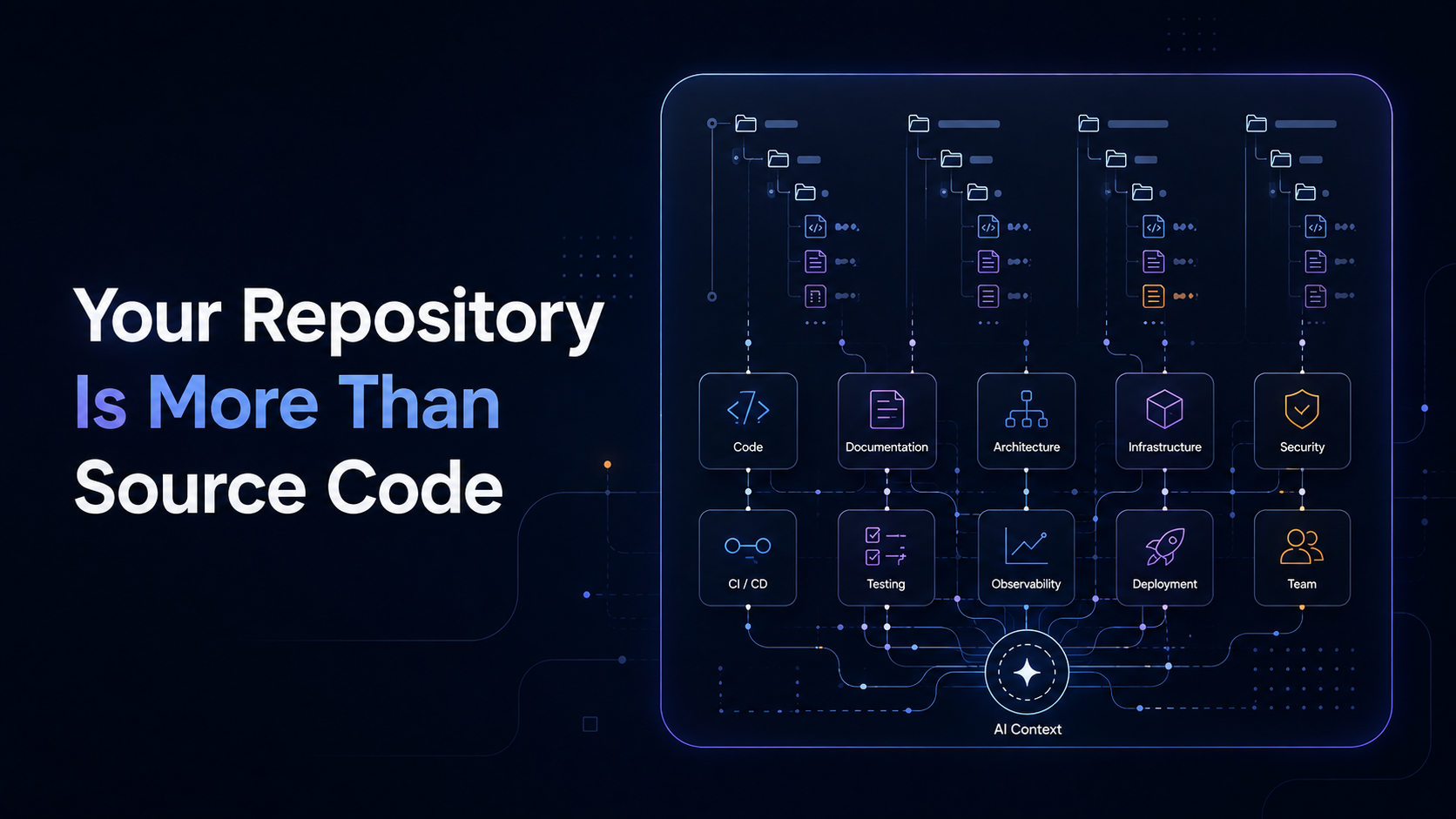
The best repository strategy begins by deciding what should evolve together, not by choosing between a monorepo and a multirepo.
Once a project commences, the engineering team creates a repository, adds a few folders, configures a pipeline, and starts building software. As the application grows, the repository structure becomes the standard.
Most repository discussions focus on whether to use a monorepo or a multirepo. Both these approaches have pros and cons, and there is no universal answer.
Every independent repository creates a boundary. This influences how software evolves, how teams collaborate, how changes are deployed, and how effectively AI can understand the system. Once you understand this, the conversation shifts from code organization to engineering design.
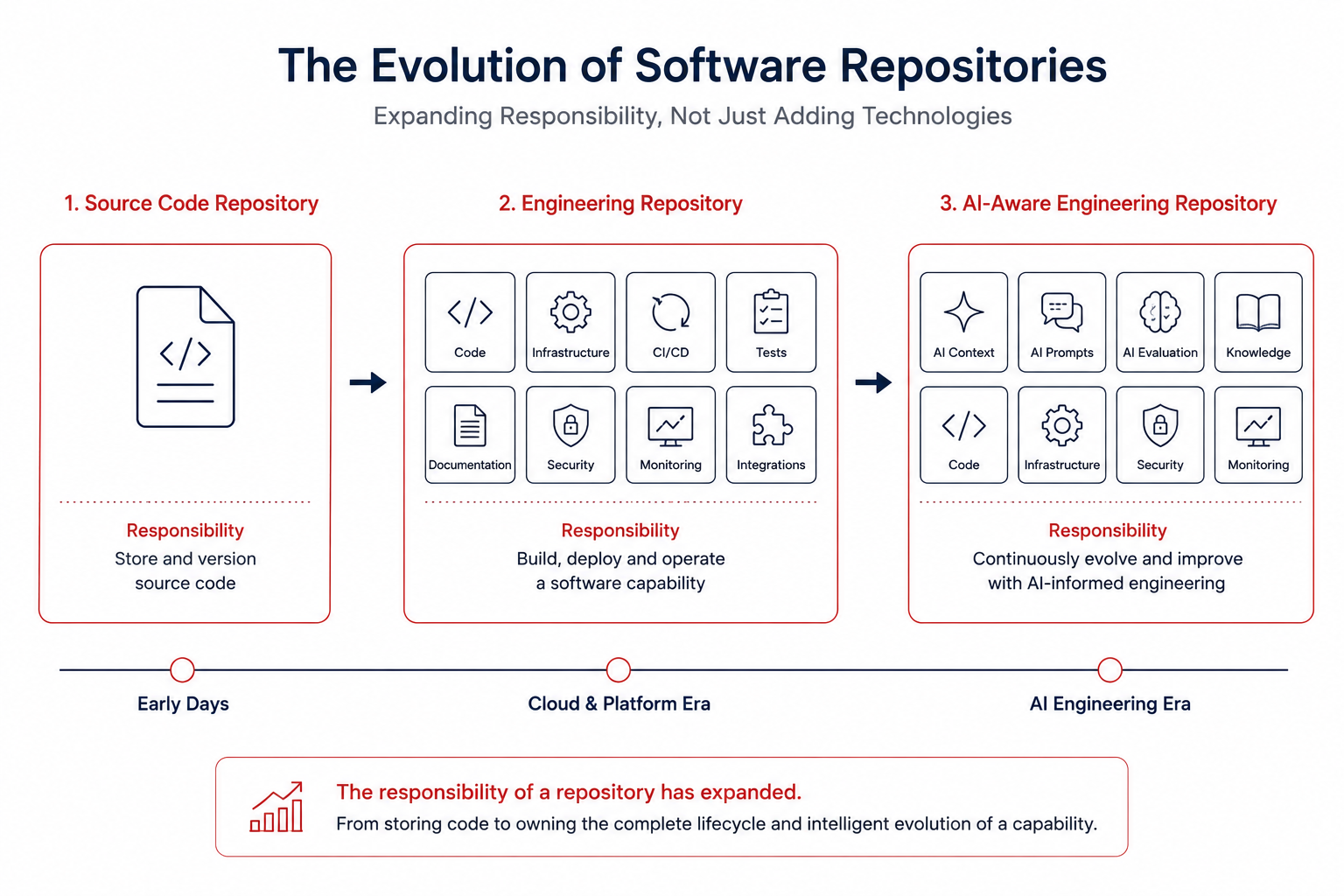
Software development has changed dramatically over the last decade. Applications are no longer delivered as a single deployable artifact running on a server. Modern solutions include web applications, APIs, serverless services, infrastructure-as-code, deployment pipelines, monitoring, and operational tooling. AI capabilities are becoming another fundamental part of modern software engineering.
Despite these changes, repository discussions stay the same as they did years ago. Teams compare monorepos with multirepos, discuss branching strategies, or debate folder structures. Those are useful decisions, but are secondary to what a repository is intended for.
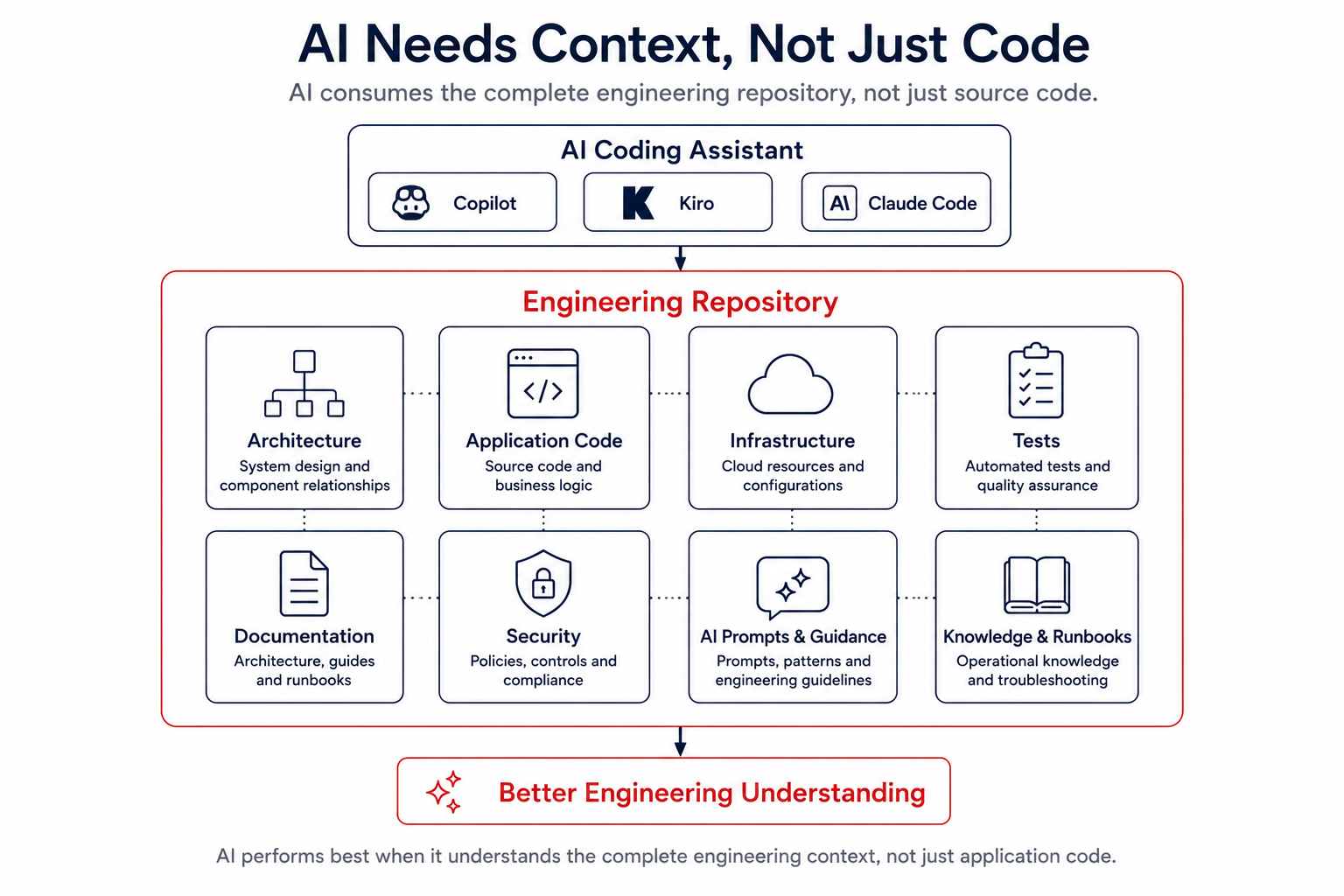
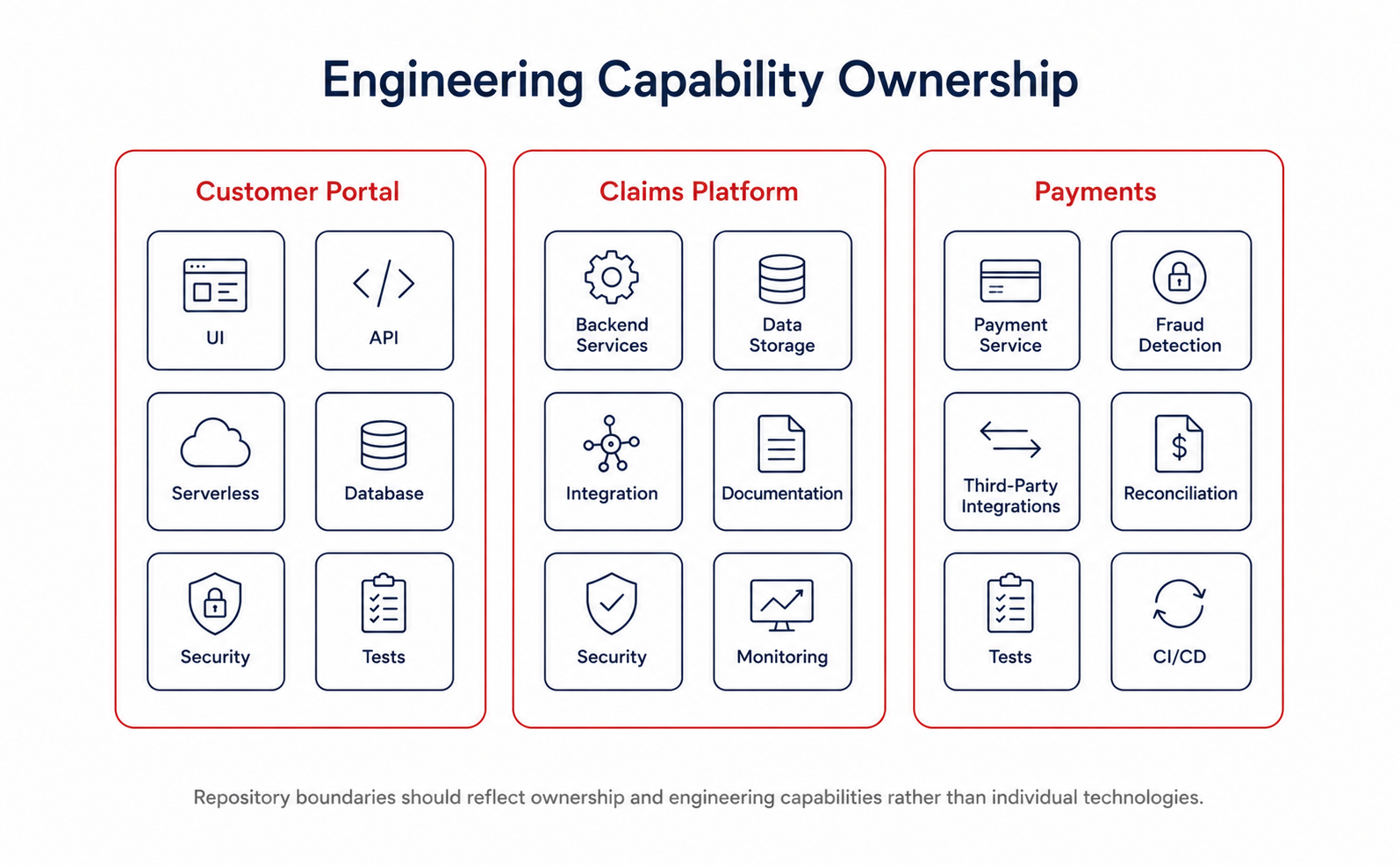
A repository is no longer just a place to store source code. It brings together everything needed to build and operate an engineering capability: application code, infrastructure, deployment automation, tests, documentation, and configuration that evolve together over time.
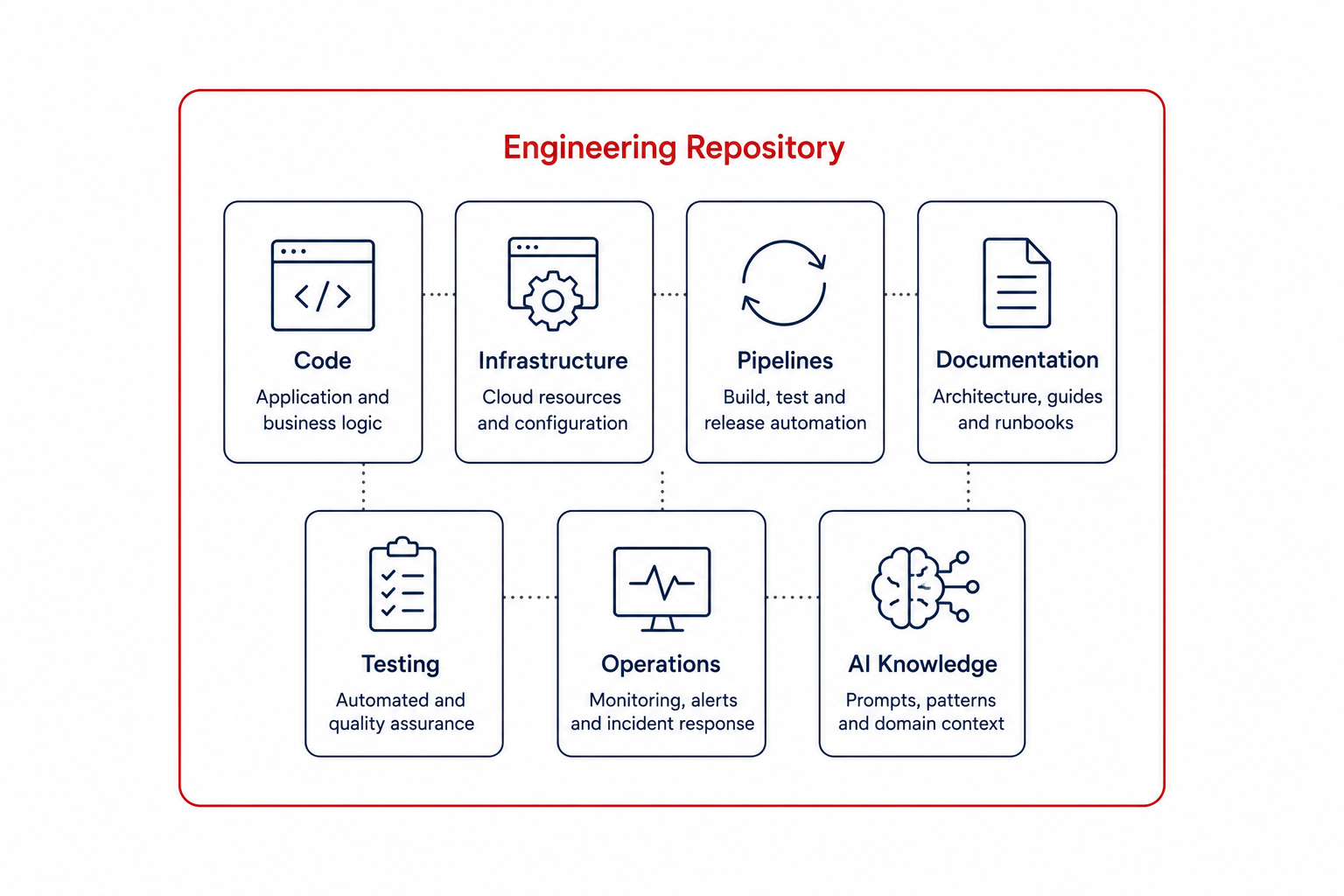
Engineering organizations organize repositories around technologies because it feels natural. Frontend code lives in one repository, backend services in another, infrastructure in a third, and shared libraries in a fourth. For many systems, this works well because different teams own different parts of the application. The challenge becomes more pronounced as systems grow and business requirements become more complex.
Customers don’t ask for a new API endpoint or an infrastructure update. They ask for capabilities like document summarization, fraud detection, or a new onboarding experience. Delivering those requests requires coordinated changes across multiple teams and technologies.
If repository boundaries do not reflect how software changes, engineering teams spend more time coordinating work than delivering it. Every additional boundary adds coordination.
This does not suggest that every application should be a monorepo, or that every service deserves its own repository. The right structure depends on the architecture, the organization, and the expected rate of change.
The more useful design question is: what engineering capability should this repository represent?
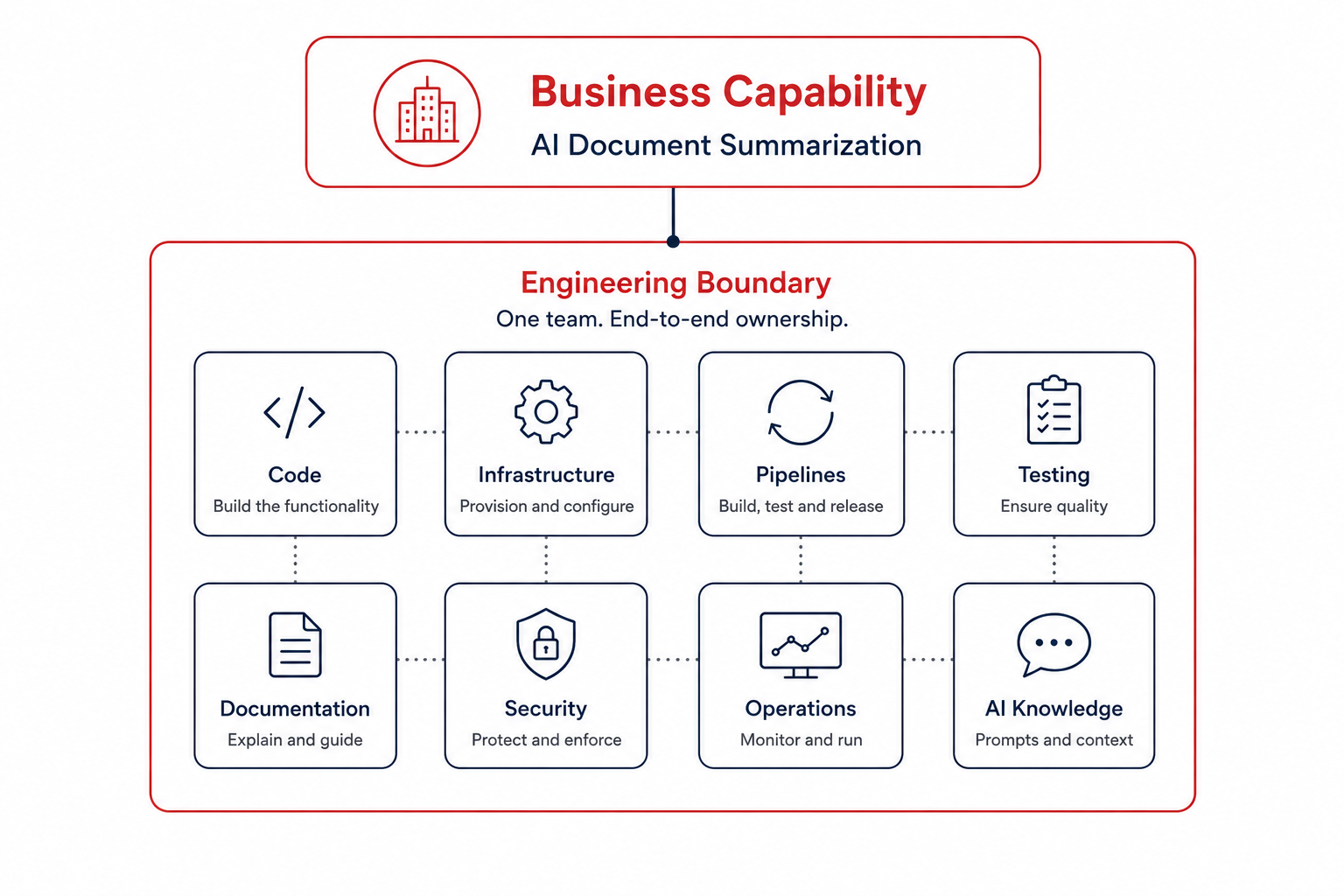
Repository structures also define ownership. Repositories are where teams define who owns an application, how changes are reviewed, and where operational knowledge lives. Ownership becomes important as organizations grow.
Organizations grow. Without it, repositories can become arbitrary while accountability becomes ambiguous.
Well-designed repositories simplify ownership by aligning technical assets with engineering responsibilities. They make it easier for new team members to understand where a capability lives, who owns it, and how changes should be introduced.
Repository discussions assume that repository and deployment boundaries are the same, but they solve different problems.
A single repository can support multiple deployment pipelines, while independent repositories can still require coordinated releases. Modern CI/CD platforms allow engineering teams to build, test, and deploy individual components regardless of how repositories are organized.
Separating repository design from deployment strategy provides flexibility. Repositories should be optimized for engineering collaboration and ownership. Deployment pipelines should be optimized for delivery and reliability. These two often complement one another. Understanding this helps avoid unnecessary repository fragmentation while supporting independent releases.
AI-assisted development introduces a new consideration that extends beyond code generation.
Experienced engineers rarely make decisions based solely on reading source code. They rely on architecture diagrams, infrastructure definitions, deployment pipelines, documentation, operational practices, security standards, and testing strategies to understand how a system behaves.
AI assistants require that same context.
Unlike human engineers, AI only understands the context it is given. A repository that captures a complete engineering capability provides AI with significantly more information to reason about than one containing only isolated implementation details. Relationships between components become clearer, allowing AI to make better recommendations.
As organizations adopt AI coding assistants, repository design becomes part of AI enablement. Well-structured engineering boundaries improve collaboration not only between people, but also between engineers and AI systems.
There is no standard repository strategy. Organizations differ in size, architecture, compliance requirements, delivery practices, and team structure. A model that works well for a startup may create unnecessary complexity in a larger enterprise, while patterns developed for large organizations add overhead for smaller engineering teams.
Before creating or reorganizing a repository, consider:
• What business capability or engineering responsibility does this boundary represent?
• Which components are expected to evolve together?
• Where should ownership naturally exist?
• Does this boundary reduce coordination or increase it?
• Will a new engineer or an AI assistant have sufficient context to understand and modify this capability?
These questions do not prescribe a monorepo or a multirepo. They provide a framework for making repository decisions intentionally rather than inheriting them from previous projects.
The discussion should no longer begin with monorepo versus multirepo. That's an implementation decision.
A better question is:
What engineering capability should this repository represent?
Answer that first, and decisions about repository structure become much clearer.


Whether you need advice or are ready to get started, we're here to help. We go the extra mile to empower your digital transformation.


